Tell us about the job
Takes about a minute. No obligation.
A contractor quoting a central AC repair in Allen County is not starting from a blank slate. 241 severe weather events were recorded in Allen County, Indiana between 2015 and 2024. At that rate, severe weather is a standing condition of operating a cooling system here, and its effects accumulate in the parts that carry electrical and mechanical stress: compressors, capacitors, and contactors show wear patterns that reflect repeated hard cycling, not a single bad event. A contractor working a repair here checks those components first, because the load this county puts on equipment regularly accelerates the failures that bring homeowners to the phone.
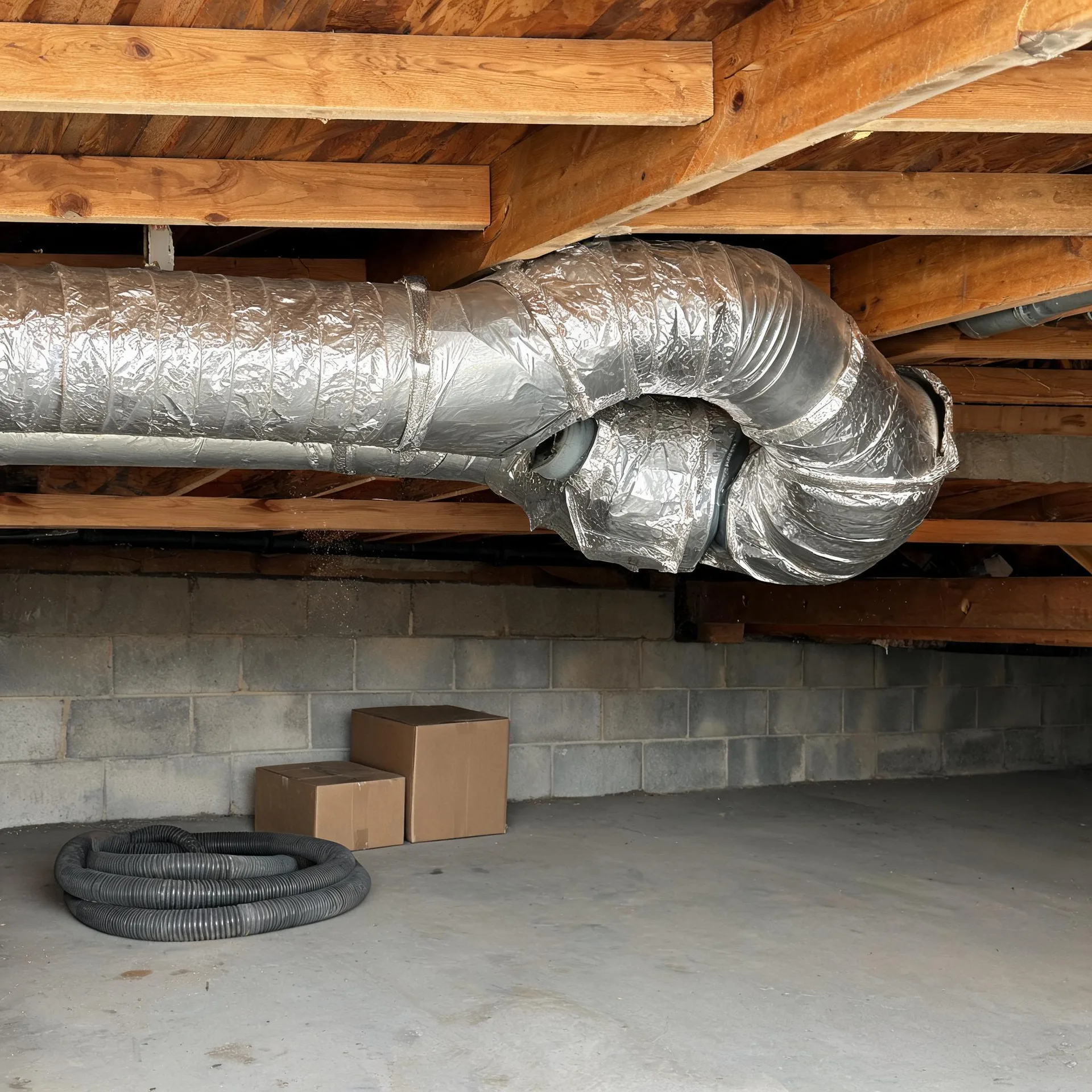
Ductwork in a house this old carries the decisions of every owner who touched it before you. Half the homes in Allen County, Indiana were built in 1976 or earlier (2020-2024 ACS 5-year). That history shows up inside a repair job: a contractor who opens the unit and fixes the mechanical fault may still leave with a system that moves air poorly, because the ducts feeding it were modified for something else and never corrected. The repair bill covers the part; the performance depends on what the ductwork behind the walls actually is.
The Parts of a Central AC a Contractor Checks First
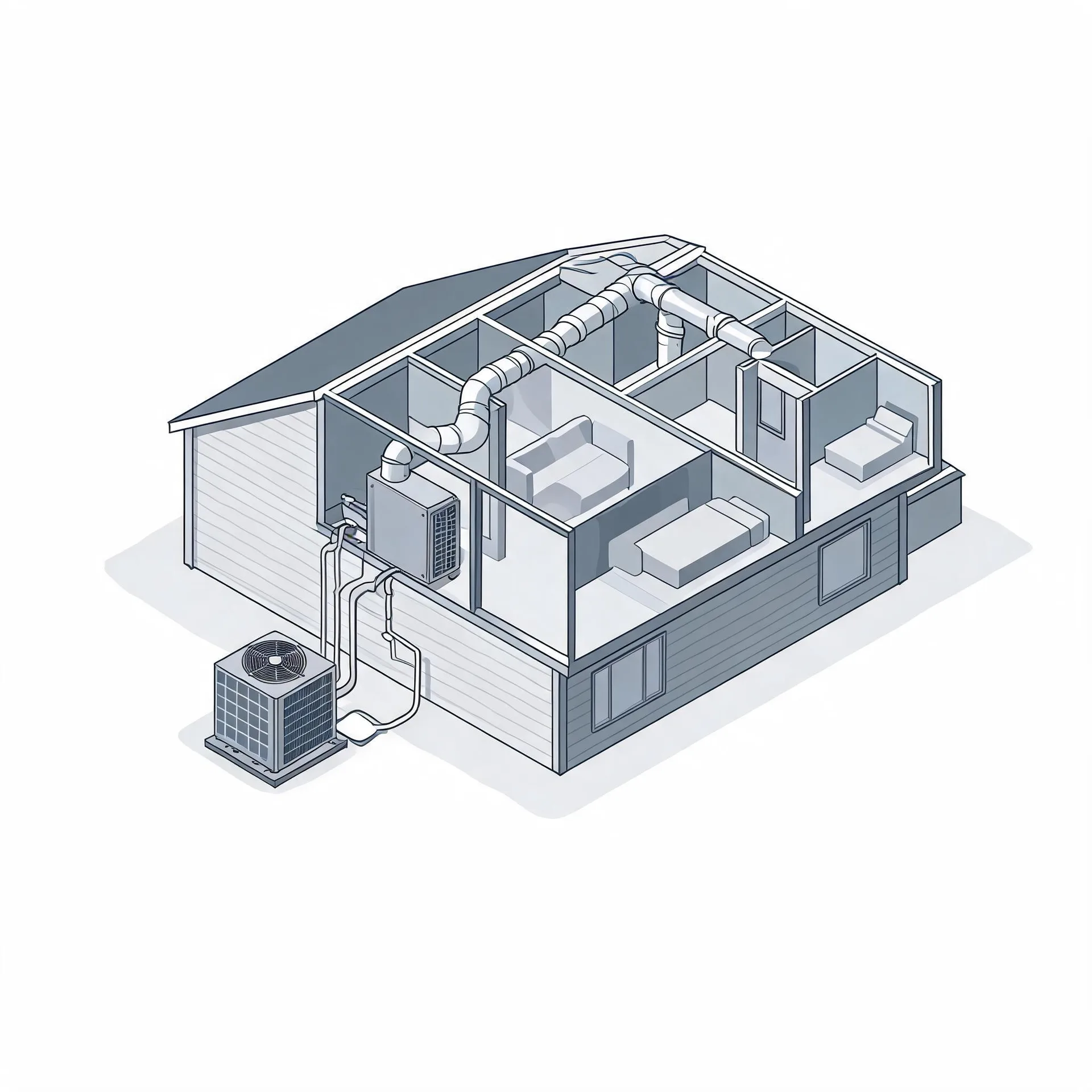
The outdoor condenser unit sits outside the house and holds the compressor and condenser coil. Those two components carry the heaviest load in the system, so when cooling fails or the unit runs but nothing changes inside, a contractor starts there. The indoor air handler or furnace coil, mounted inside near your central duct connection, is the next stop.
The refrigerant lines run between the two units, and the expansion valve controls flow between them. The thermostat, on an interior wall, tells the whole system when to run. A contractor checks the thermostat, the refrigerant charge, and the line connections whenever a symptom points toward poor output rather than a hard mechanical failure.
The drawing shows a typical central system layout, and a licensed contractor will determine which components apply to your specific setup.
Find a contractor in Allen CountyAllen County, Indiana, by the numbers
241 severe weather events were recorded in Allen County, Indiana between 2015 and 2024.
NOAA National Centers for Environmental Information, Storm Events Database, bulk CSV export, events 2015-01-01 through 2024-12-31.Half the homes in Allen County, Indiana were built in 1976 or earlier (2020-2024 ACS 5-year).
U.S. Census Bureau, 2020-2024 American Community Survey 5-Year EstimatesAllen County, Indiana holds 166,285 housing units (2020-2024 ACS 5-year).
U.S. Census Bureau, 2020-2024 American Community Survey 5-Year EstimatesOwners occupy 68.9% of the occupied homes in Allen County, Indiana (2020-2024 ACS 5-year).
U.S. Census Bureau, 2020-2024 American Community Survey 5-Year EstimatesCodes & Standards Governing Central AC Repair in Allen County, Indiana8 sourced rules and standards
What happens when a contractor comes out for HVAC repair in Allen County
Split-system central air conditioners rated below 45,000 Btu/h manufactured on or after January 1, 2023 must meet a federal minimum of 13.4 SEER2.
Split-system central air conditioners rated at or above 45,000 Btu/h manufactured on or after January 1, 2023 must meet a federal minimum of 13.4 SEER2.
Split-system central air conditioners manufactured between January 1, 2015 and December 31, 2022 had to meet 13 SEER, the metric that preceded SEER2.
Single-package central air conditioners manufactured on or after January 1, 2023 must meet a federal minimum of 13.4 SEER2.
Space-constrained central air conditioners manufactured on or after January 1, 2023 must meet a federal minimum of 11.7 SEER2.
Federal efficiency standards for split-system central air conditioners and heat pumps are set on each certified combination of outdoor unit and indoor coil rather than on the outdoor unit alone.
Residential and light commercial air conditioning and heat pump systems assembled in the field, including mini-splits and unitary systems, may not be installed on or after January 1, 2025 using a refrigerant with a global warming potential above 700.
A field-assembled system whose specified components were all manufactured or imported before January 1, 2025 carries no installation compliance date under the refrigerant restrictions and may still be installed.
Severe Weather Events in Allen County
Weather puts direct load on central AC systems. The harder a unit works to hold temperature against outside conditions, the more stress its components absorb over time, and that accumulated strain is what drives repair calls in any given area.
241 severe weather events, 2015–2024. Source: NOAA National Centers for Environmental Information, Storm Events Database.